A CRACKED TOOTH can be hard to pin down. The pain may come and go, show up only when you chew, or flare when you sip something cold. Cracks are often too small to see, even on an X-ray, so many patients live with discomfort for months before they get answers. As endodontists, we specialize in diagnosing and treating cracked teeth. The right treatment depends on what kind of crack you have.
Craze Lines
Craze lines are tiny, shallow cracks in the outer enamel. They’re very common in adult teeth and usually cause no pain. Because they don’t weaken the tooth, they typically don’t need treatment. If they bother you cosmetically, your general dentist can polish or bond them.
Fractured Cusp
The cusps are the raised points on the chewing surface of your back teeth. When one breaks, often around a large filling, you may feel sharp pain when biting. A fractured cusp rarely reaches the pulp, which is the soft inner tissue that holds the tooth’s nerves and blood vessels. A crown or onlay is usually enough to restore the tooth.
Cracked Tooth
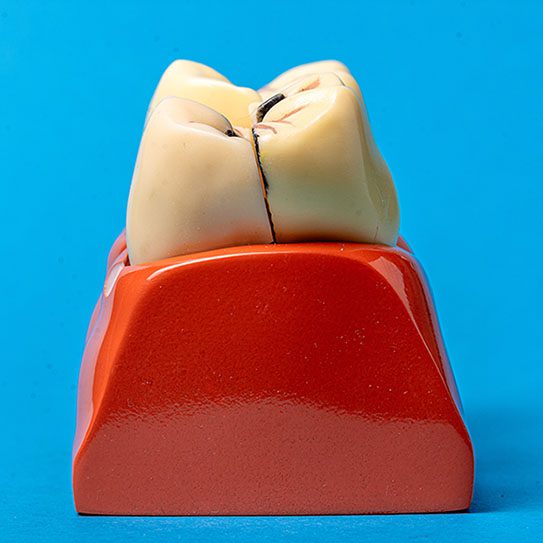
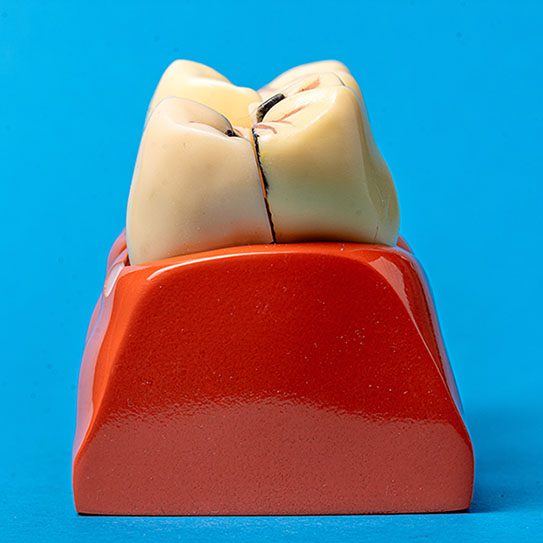
This crack starts on the chewing surface and extends down toward the root. Left untreated, it can spread and let bacteria into the pulp, which leads to inflammation or infection. Early diagnosis matters. If the pulp is affected, we perform root canal treatment to remove the damaged tissue. Your dentist then places a crown to hold the tooth together and protect it from further cracking. If the crack has spread below the gumline, the tooth may need to be extracted.
Split Tooth
A split tooth is usually a cracked tooth that wasn’t treated in time. The crack has progressed until the tooth separates into distinct pieces. A split tooth can’t be saved whole. Depending on where the split is and how far it goes, we may be able to save part of the tooth with root canal treatment and a crown. In other cases, extraction is the best option.
Vertical Root Fracture
These cracks begin in the root and travel up toward the chewing surface. They often cause few symptoms, so they can go unnoticed until the surrounding bone and gums become infected. Treatment may involve removing the fractured root in a procedure called a root resection. When that isn’t possible, extraction may be recommended.
Signs You Might Have a Cracked Tooth
- Pain when chewing: This is especially telling if the pain hits when you release your bite.
- Temperature sensitivity: Hot or cold foods and drinks may cause a sudden twinge.
- On-and-off discomfort: The pain comes and goes rather than staying constant.
- Gum swelling: You may notice tenderness or puffiness around one specific tooth.
How We Find Cracks
Cracks can be tricky to locate, which is why an endodontist’s training and tools make a difference. We use high-powered magnification, special dyes, bite tests, and 3D cone-beam imaging to find where a crack is and how deep it goes. That detailed picture lets us recommend the most conservative treatment that will work.
Don’t Wait to Get It Checked
Unlike a broken bone, a cracked tooth can’t heal on its own. Most cracks get worse over time, and the sooner we treat yours, the better the odds of saving your natural tooth. If you have tooth pain that comes and goes or hurts when you bite, give us a call to schedule an evaluation.